






Rome has plenty of unique neighborhoods, but the Jewish Quarter is particularly distinctive. Its cobblestone streets, historic piazzas, and striking architecture give it so much character.
Why the Jewish Ghetto Is a Unique Neighborhood
Today, a thriving Jewish community still lives here, continuing traditions that date back centuries. That living history makes it one of the most fascinating places in Rome for visitors who want to experience local culture while learning about the past.
Our Rome food tours, including the Jewish Ghetto Food Tour, take visitors through some of the area’s most iconic kosher eateries while admiring the architecture and soaking up the lively street atmosphere. If you don’t have time for a full tour and only a short visit, here’s how to visit the Jewish Ghetto in Rome.
The History and Geography of the Jewish Ghetto
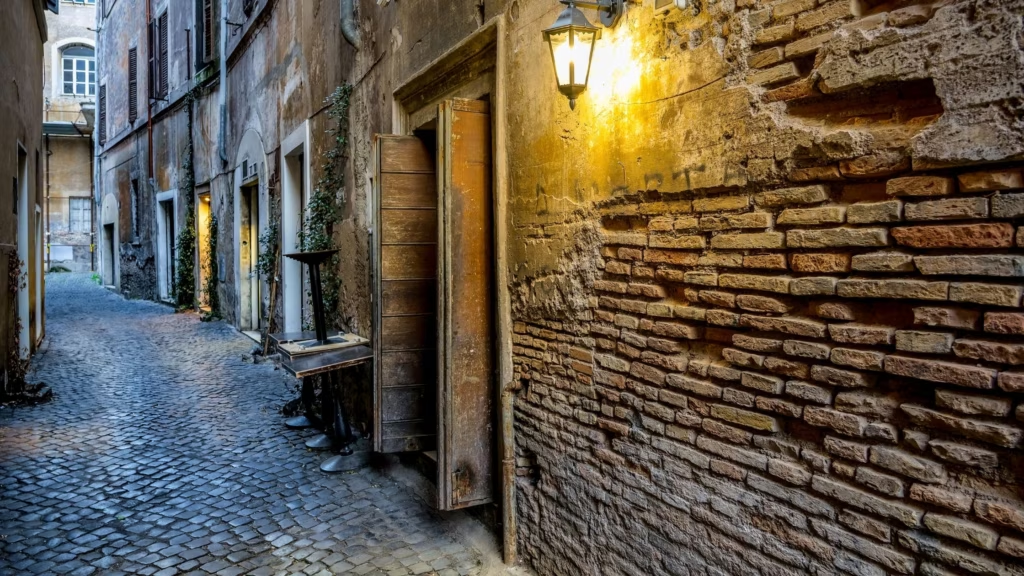
The history of the Jewish Ghetto is quite varied, as it has undergone major transformations over the years. It was first established under Pope Paul IV through the papal bull Cum Nimis Absurdum.
Walls were constructed around the district, confining the Jewish population within the area of Rione Sant’Angelo. This separation shaped the area’s development for an extended period, with influences from powerful families such as the Mattei, as well as major shifts, including the Napoleonic conquest and the integration into the Kingdom of Italy.
Tragically, the neighborhood also faced severe persecution during the Nazi-Fascist occupation. One of the darkest moments occurred on 16 October 1943, when more than 1,000 Jewish residents were rounded up and deported to Auschwitz.
These days, the Jewish Ghetto sits in a convenient central location in Rome. It lies close to major landmarks and neighborhoods, including the Tiber River, Trastevere, and Vatican City, making it an easy and worthwhile stop for visitors exploring the city.
Main Attractions and Landmarks
Rome’s Jewish Ghetto has plenty of attractions and landmarks worth checking out. One of the highlights is the Great Synagogue of Rome, an impressive building designed in a blend of Historicism and Art Nouveau architecture.
For a deeper look into the city’s Jewish heritage, the Jewish Museum of Rome offers fascinating insights through a wide range of artifacts connected to the area’s archaeological and cultural history.
If you’re interested in historic ruins, make sure to stop by the Portico d’Ottavia, which once served as a fish market during medieval times. Other notable sights nearby include beautiful fountains like the Fontana delle Tartarughe and the large open-air theater, Teatro Marcello.
One popular site that many also include on their itinerary is La Bocca della Verità, the famous marble mask that has become a favorite stop for visitors in the Jewish Ghetto.
Cultural and Religious Life in the Ghetto
Cultural and religious life is still very important in Rome’s Jewish Ghetto today. If you time your visit right, you can experience Jewish holidays such as Hanukkah, along with liturgical singing at synagogues like the Great Synagogue of Rome.
Around the neighborhood, you’ll also notice religious symbols, including menorahs and mezuzahs, along with artisan shops, cultural workshops, and small gatherings that reflect the traditions and daily life of the community.
Jewish Cuisine and Dining Options
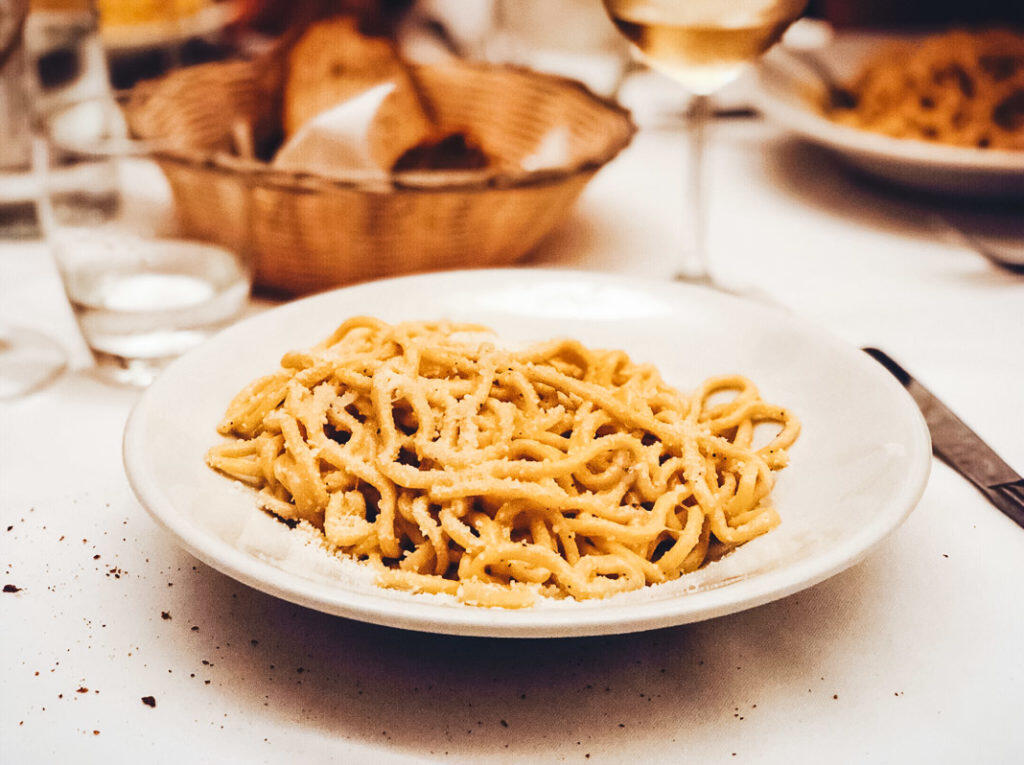
The culinary scene in the Jewish Ghetto, Rome, is incredibly diverse, with plenty of standout dishes and kosher and fusion food experiences. Eateries here serve some of the area’s finest plates, including earthy Carciofi alla Giudia, salty Baccalà, crisp Fiori di Zucca, and nutty Jewish pizza.
Visitor Information and Practical Tips
- You may be able to walk to the Jewish Ghetto from where you’re staying, depending on the location. However, if your hotel isn’t located nearby, then you can take Bus 64 from Nazionale/Torino to Argentina, and then it’s a short walk from there.
- Given the small, compact nature of the Jewish Ghetto, it’s better to explore the area on foot, as it will give you much more flexibility.
- There are many ways to see the Jewish Ghetto, including on guided tours with local guides and by yourself on a self-guided tour. Make sure to review different itineraries to find the best solution for you.
- The Jewish Ghetto is open 24/7, so you can visit whenever you want, but I recommend going there during the daytime to really feel the local atmosphere.
- You will find lots of amenities in the Jewish Quarter, including traditional eateries, pharmacies, and shops, so you have everything you need to spend a full day here.
- If you don’t want to queue for things, try to come early in the morning to avoid the crowds, as it usually gets busier as the day goes on.
Hidden Gems and Local Stories
Having lived in Rome for so long, I’ve come across quite a few hidden gems in the Jewish Ghetto that many visitors seem to miss, and I’m always surprised more people don’t stumble upon them.
One spot worth checking out in the Jewish Ghetto in Rome is the courtyard at Palazzo Mattei, which is small, quiet, and full of charm. There are also some lovely galleries nearby, including ALEFBET – The Hebrew Letters Art Gallery. It features plenty of beautiful artwork, along with a few artisan shops in the surrounding streets.
Keep an eye out for local festivals, especially around Hanukkah, when you might catch special events such as menorah lighting ceremonies and storytelling gatherings. Also, look out for Stolpersteine. These are small plaques placed in the pavement to commemorate victims of the Nazi regime.
Sources:
Eating Europe. (n.d.). Rome food tours. Retrieved March 10, 2026, from https://ligne-natura.today/rome/%3C/span%3E%3C/a%3E%3C/p%3E
Eating Europe. (n.d.). Rome Jewish Ghetto food tour. Retrieved March 10, 2026, from https://ligne-natura.today/rome/rome-jewish-ghetto-food-tour/%3C/span%3E%3C/a%3E%3C/p%3E

Eternal Rome: Trastevere Food Tour & Jewish Ghetto
Discover Trastevere's top restaurants with VIP access, while exploring the historic Campo de' Fiori and tasting unique dishes in the Jewish Ghetto, including a Slow Food Presidium.
- Mon-Sat
- 4 Hours
- Small Group

Twilight® Trastevere Rome Food Tour
Enjoy Trastevere's hottest spots and best kept secrets like a true VIP
- Daily
- 4 Hours
- Small Group

- Daily
- 3.5 Hours
- Small Group

VIP Golf Cart Food Tour in Rome
Get the best of Rome and have fun on our brand new golf cart!
- Daily
- 4 Hours
- Small Group